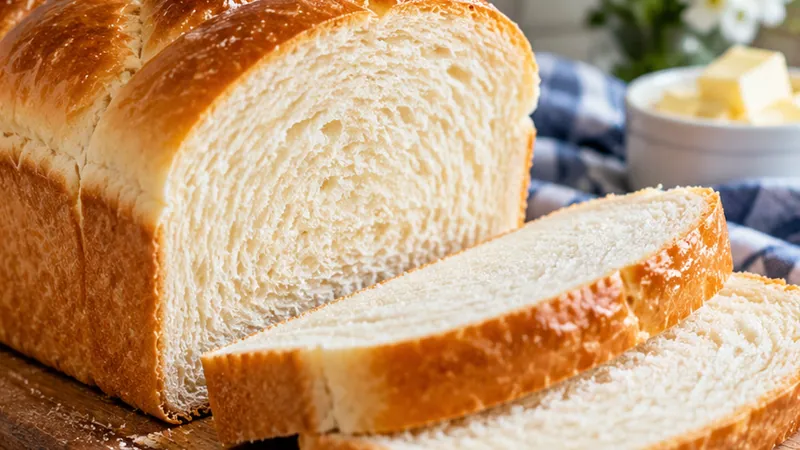
The first time you lift the lid off this Amish White Bread, you will meet a cloud soft loaf with a faint sweet note and a tender, even crumb that practically melts between your teeth.
You will love it on weeknight sandwiches or toasted with butter on chilly mornings, and it is reliable enough to become your go to recipe when you want something classic and fuss free.
 Save
SaveAunt Lucy taught me her no fuss version, and there is something magical about pressing the dough down, peeking through the kitchen door as it rises, and hearing the little loaf sing as it cools.
Amish White Bread Recipe
Ingredients
Bread
Optional for richness
Instructions
- Activate the yeast
In a small bowl, whisk warm water, sugar, and yeast. Let it sit 5 to 10 minutes until frothy, then stir in the melted butter and vinegar if using.
- Mix the dough
In a large mixing bowl, combine the flour and salt. Make a well in the center and pour in the activated yeast mixture. Stir with a spoon or dough hook until a shaggy dough forms.
- Knead by hand or stand mixer
Turn the dough onto a floured surface and knead for about 8 to 10 minutes until smooth and elastic. In a stand mixer, use the dough hook and medium speed for the same time.
- First rise
Place the dough in a lightly oiled bowl, cover with a damp kitchen towel or plastic wrap, and let it rise in a warm spot for about 1 to 1.5 hours, or until nearly doubled in size.
- Shape the loaf
Gently punch down the dough to release air. Shape it into a loaf that fits your greased bread pan or place it on a baking sheet for a free form loaf.
- Second rise
Cover and let rise again for 30 to 45 minutes, until puffy and about one and a half times larger. The dough should spring back slowly when gently pressed.
- Bake
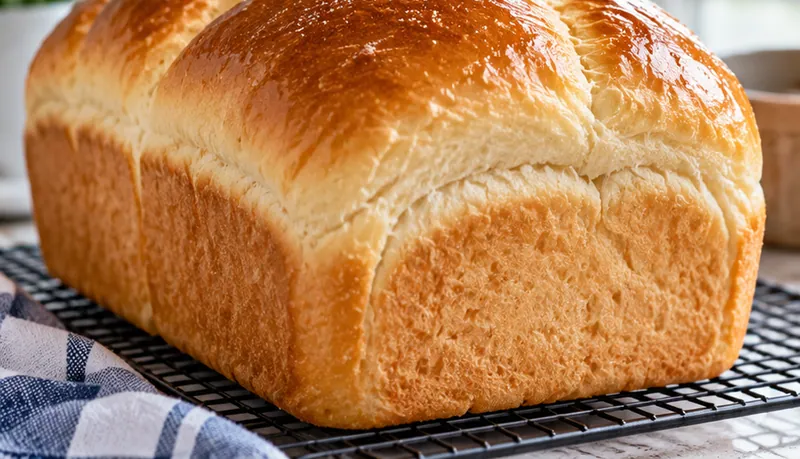
Preheat your oven to 375 degrees Fahrenheit. Bake the loaf for 30 to 35 minutes, or until the top is golden brown and the internal temperature reaches 190 to 200 degrees Fahrenheit.
- Cool completely
Remove from oven and let the bread cool in the pan for 10 minutes, then transfer to a wire rack. Cooling completely before slicing keeps the crumb intact.
- Slice and store
Use a serrated knife for clean slices. Wrap leftover bread in parchment or a breathable bag, and keep at room temperature for up to 3 days.
- Freeze for later
For longer storage, slice the loaf and freeze in a zip top bag. Toast frozen slices directly in the toaster for a quick breakfast.
Substitutions and variations
- For a gluten free version, use a gluten free flour blend with xanthan gum and add 1 tablespoon psyllium husk powder to help the dough hold together.
- To make it dairy free, swap melted butter for an equal amount of melted coconut oil or neutral vegetable oil.
- If you prefer a slightly sweet tea bread texture, add 1 tablespoon of molasses along with the sugar.
- For a richer flavor, use whole milk instead of water and add the butter after the dough has combined.
- To make the loaf dairy free and vegan, use plant based milk and a vegan butter substitute.
Chloe's tips
- Use a kitchen scale for best results when measuring flour by weight.
- If your kitchen is cool, let the dough rise in a turned off oven with the light on.
- For an extra soft crust, place a pan of water at the bottom of the oven during baking.
- Let the bread cool fully before storing to avoid a gummy texture.
- Refresh day old bread by wrapping it in foil and warming in a 350 degree Fahrenheit oven for 10 minutes.
How to store it
- Store at room temperature in a bread box or paper bag for 3 to 4 days.
- Keep in an airtight container in the refrigerator for up to 1 week, and warm slices briefly before serving.
- Freeze for up to 3 months in a heavy duty freezer bag, and thaw in the fridge overnight.
Serving suggestions
Serve this soft loaf in classic, simple ways that highlight its gentle sweetness.
- Thin sandwich slices with turkey and cranberry
- Grilled cheese with sharp cheddar and tomato
- Toast with creamy peanut butter and a drizzle of maple syrup
- Cubed alongside soup for a comforting bread bowl
- Spread with butter and a sprinkle of sea salt for a quick snack
Frequently asked questions
Why did my bread turn out dense?
Dense bread is often caused by under kneading, over proofing, or not using fresh yeast. Make sure the dough is smooth and elastic, let it rise in a warm spot until it roughly doubles, and check that your yeast activates before you start.
Can I use whole wheat flour instead of all purpose?
Yes, you can replace up to half the flour with whole wheat for a nuttier loaf, but keep at least half all purpose to maintain softness and rise.
How do I know when the bread is fully baked?
The loaf is done when the crust is deep golden brown, the top feels firm, and a quick read with a thermometer shows 190 to 200 degrees Fahrenheit.
Can I add seeds or herbs to this recipe?
Absolutely; stir in sunflower seeds, oats, or dried herbs during the mixing stage for extra texture and flavor.
Let's get cooking!
I hope you enjoy baking this Amish White Bread and sharing it with the people you love; there is something timeless about pulling a fresh, fragrant loaf from the oven.