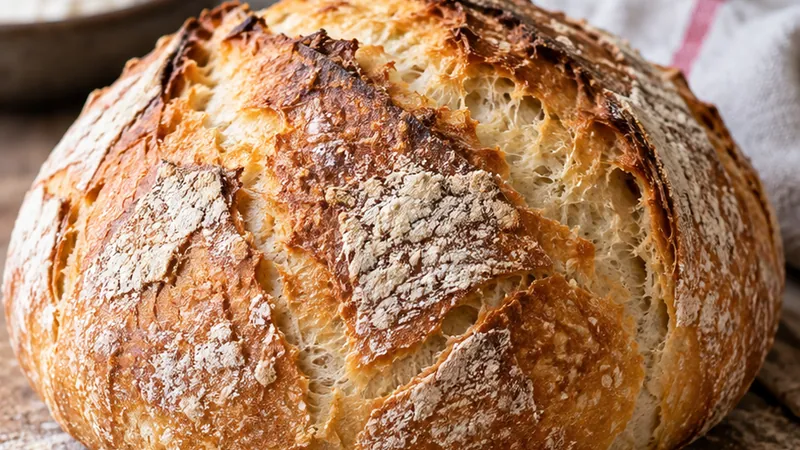
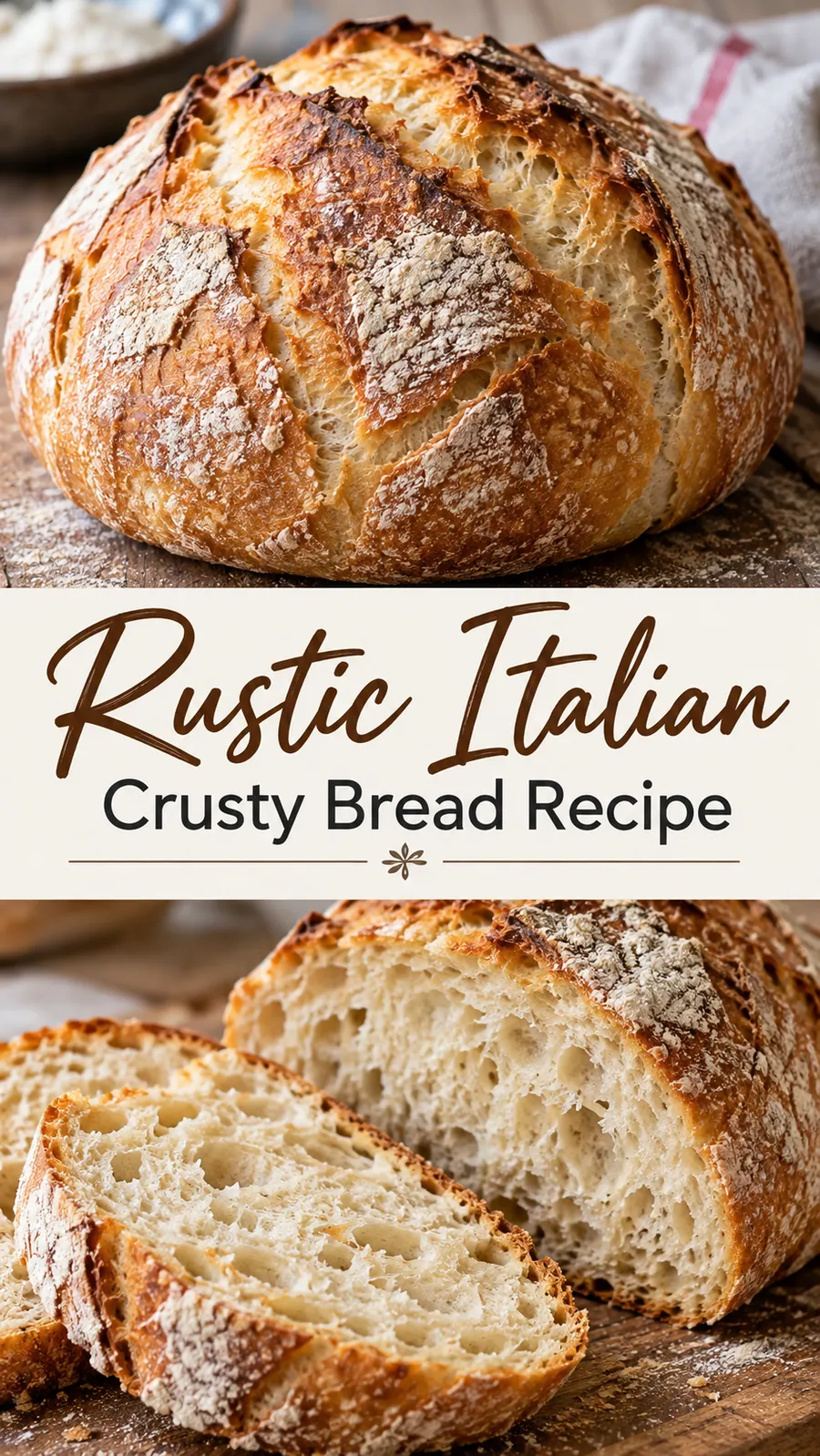
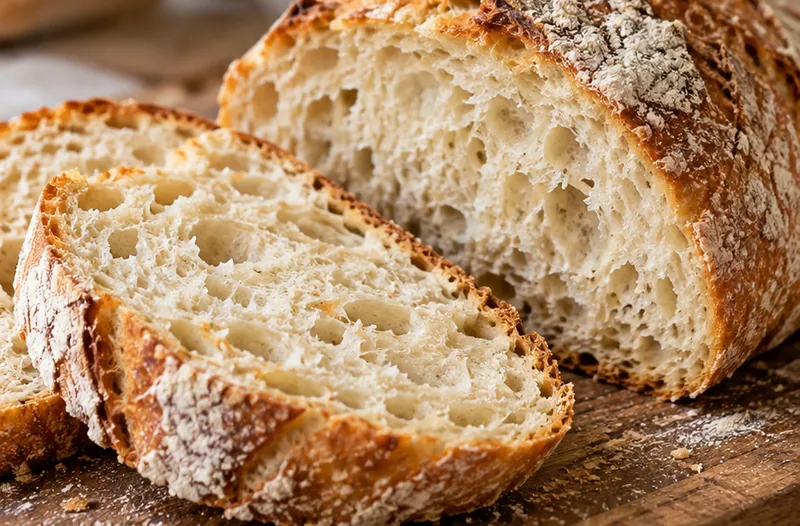
The moment you pull this rustic Italian Crusty Bread from the oven, the air fills with toasty wheat and a whisper of yeast, and the deep golden crust crackles as it cools.
I love baking it on weekend mornings when I have time to watch the dough slowly rise and develop flavor, then enjoy it at lunch with fresh tomatoes and basil.
 Save
SaveThere is something wonderfully grounding about tearing into a loaf with a chewy interior and crisp shell, knowing you created every pocket and crack by hand.
Rustic Italian Crusty Bread Recipe
Ingredients
Dough
For baking
Instructions
- Activate the yeast
In a small bowl, combine warm water, sugar, and yeast. Let it sit 5 to 10 minutes until frothy, which shows the yeast is lively and ready to create rise.
- Mix the dough
In a large mixing bowl, whisk the flour and salt. Make a well in the center and pour in the activated yeast mixture and olive oil. Stir with a spoon or dough hook until a shaggy dough forms.
- Knead by hand or mixer
Turn the dough onto a floured surface and knead for about 8 to 10 minutes until smooth and elastic. If using a stand mixer, knead on medium speed for 6 to 8 minutes.
- First bulk rise
Place the dough in a lightly oiled bowl, cover with a damp kitchen towel or plastic wrap, and let it rise in a warm spot for 1 to 1 1/2 hours, or until roughly doubled in size.
- Shape the loaf
Gently punch down the dough to release air. Turn it onto a cornmeal dusted surface, shape it into a round or oval loaf, and pinch the edges underneath to create surface tension.
- Proof on a peel
Dust a piece of parchment with cornmeal, place the shaped dough on top, cover, and let it proof for 30 to 45 minutes until puffy. This step helps the loaf hold its shape in the oven.
- Score the top
About 10 minutes before baking, remove the dough from its cover. Use a sharp lame or razor blade to make shallow cuts on the top, which controls expansion and creates an appealing pattern.
- Bake with steam
Preheat your oven to 450°F (230°C). If your oven allows, place a small pan of water at the bottom for steam, or spray water on the oven walls. Bake covered for the first 20 minutes, then uncovered for another 15 to 20 minutes until the crust is deep golden and sounds hollow when tapped.
- Cool completely
Transfer the loaf to a wire rack and let it cool fully for at least 1 to 2 hours before slicing. Cutting too soon can result in gummy texture, while cooling lets the crumb set and flavors develop.
- Serve and store
Slice the rustic loaf with a serrated knife for clean edges. Enjoy it fresh spread with olive oil, jam, or your favorite sandwich fillings. Store in a paper bag at room temperature for up to 3 days.
Substitutions and variations
- Use whole wheat flour for a nuttier flavor and denser crumb.
- Substitute active dry yeast with instant yeast, using the same quantity.
- Replace sugar with a drizzle of honey for a subtle floral note.
- If you prefer a softer crust, steam the oven less or add a small pan of water.
- Use a stand mixer with a dough hook if you do not want to knead by hand.
Chloe's tips
- Keep your oven fully preheated so the crust sets quickly and pops into bloom.
- For extra oven spring, chill the shaped dough in the fridge for 30 minutes before scoring.
- Use a Dutch oven for a beautifully blistered crust if you want a bakery style finish.
- Avoid over-flouring the surface when shaping, which can weigh down the loaf.
- If the crust seems too thick, slightly lower the oven temperature and extend the bake time.
How to store it
- Let the bread cool completely before storing to preserve the crust texture.
- Keep at room temperature in a paper bag for best airflow.
- For longer storage, slice and freeze in a zip bag, then toast to refresh.
Serving suggestions
Serve this rustic loaf warm from the oven for the best flavor and texture.
- Toast and drizzle with olive oil and flaky salt
- Use for hearty paninis and pressed sandwiches
- Pair with a fresh tomato and basil salad
- Serve alongside soups and hearty stews
Frequently asked questions
Why didn’t my loaf rise much in the oven?
It may not have proofed enough, your oven temperature could be low, or the dough was overworked. Ensure a warm proofing spot, a proper preheat, and gentle handling.
Can I use all purpose flour instead of bread flour?
Yes, all purpose works well and gives a slightly softer crumb. Bread flour gives more structure and chew, but this recipe is flexible.
How do I know when the bread is fully baked?
The crust should be deep golden brown, and the loaf should sound hollow when tapped. An instant read thermometer should register around 190 to 210°F.
What can I do with day old bread?
Revive it in a 350°F oven for 5 to 10 minutes, or turn it into croutons, breadcrumbs, or panzanella salad.
Let's get cooking!
Baking this rustic Italian Crusty Bread at home is more rewarding than you might think, and the aroma alone makes the effort worthwhile. Slice, share, and savor your homemade loaf with pride.